Do a search:

Most searched
Fuel price
Pre-salt
Team Petrobras
O uso deste material é autorizado apenas para fins editoriais.
Petrobras launches sustainable aviation fuel produced entirely in Brazil
Company announces the first deliveries of SAF that meets global quality criteria, marking another important step in leading the country's just energy transition
Francisco de Souza

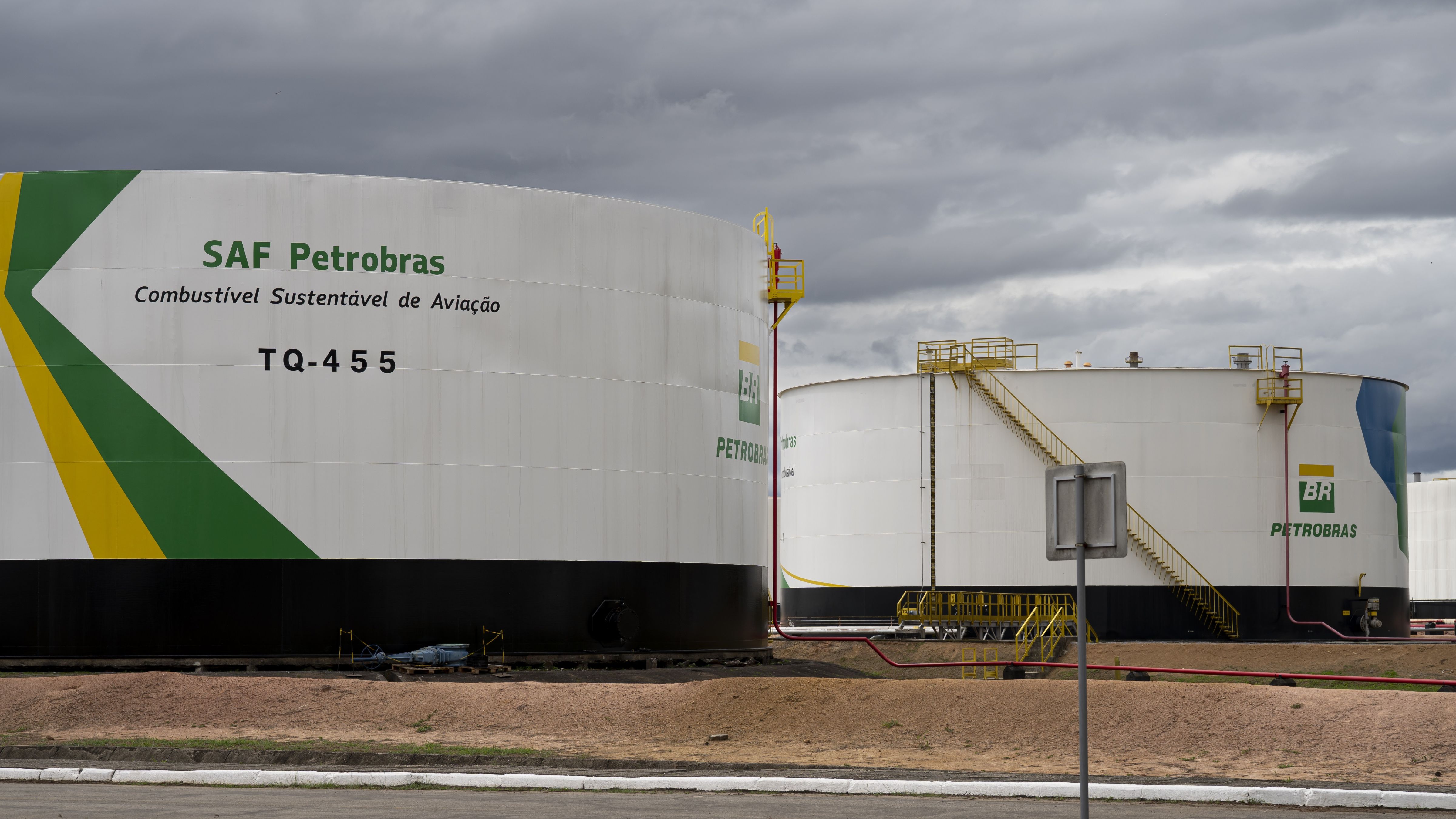
SAF storage tank at the Duque de Caxias Refinery (Reduc)
Download SAF storage tank at the Duque de Caxias Refinery (Reduc)The first deliveries of sustainable aviation fuel (SAF) were announced by Petrobras on Friday (12/05) in Rio de Janeiro. The company is the first to produce, entirely in Brazil, the fuel that receives sustainability certification according to the rules of ICAO (International Civil Aviation Organization). The volume of 3,000 m³ was sold to aviation fuel distributors operating at Tom Jobim International Airport (Galeão – RJ). This volume corresponds to approximately one day of consumption at airports in the state of Rio de Janeiro.
Sustainable aviation fuel, also known as SAF (Sustainable Aviation Fuel), can replace conventional jet fuel without the need for modifications to aircraft or refueling infrastructure. This makes it a practical and immediate solution for reducing emissions in the aviation sector.
"SAF, produced through co-processing in Petrobras's refining system, is a solution that contributes to meeting the decarbonization targets of the aviation sector. It is a competitive product that meets the strict international aviation standards. We are offering the domestic market the opportunity to meet global demands, anticipating compliance with CORSIA, which is an international program for reducing emissions from international flights," says Petrobras president Magda Chambriard.
The early production of SAF ahead of current legislation is essential for the aviation market, given the sector's upcoming requirements. Starting in 2027, airlines in Brazil will have to begin using this type of fuel on international flights, in accordance with ICAO's CORSIA (Carbon Offsetting and Reduction Scheme for International Aviation); and on domestic flights, based on the Future Fuel Law.
A new generation of fuels for the aviation sector
Petrobras's SAF has ISCC-CORSIA sustainability certification (International Sustainability Carbon & Certification – Carbon Offsetting and Reduction Scheme for International Aviation). It is a fuel with lower carbon intensity because it uses a percentage of plant-based feedstock, which is processed together with mineral jet fuel.
At the moment, Petrobras is certified to use technical corn oil (TCO), a residual feedstock, or soybean oil, with an expected reduction of up to 87% in net CO₂ emissions in the renewable portion. The resulting product is chemically identical to mineral jet fuel, but with a share derived from sustainable feedstock.
The fuel from the first deliveries was produced at the Duque de Caxias Refinery (Reduc) in Rio de Janeiro, which is certified to produce and market SAF. Reduc has authorization from the National Agency of Petroleum, Natural Gas and Biofuels (ANP) to incorporate up to 1.2% renewable feedstock in the production of SAF through this route.
The Henrique Lage Refinery (Revap), in São José dos Campos (SP), has already conducted tests for producing SAF through the co-processing route of vegetable oil with traditional petroleum streams. The expectation is that, still in 2026, the Paulínia Refinery (Replan) in the state of São Paulo and the Gabriel Passos Refinery (Regap) in Minas Gerais will also begin producing and marketing the fuel.
Photos


Downloads
Text of this article
Text downloadVideos from this article
You may be interested in


Use our search to find what you are looking for
Do a search:
Most searched
Fuel price
Pre-salt
Team Petrobras
Choose a channel:
Do a search:
Most searched
Fuel price
Pre-salt
Team Petrobras
Accessibility:
Language:
Select a language: