Do a search:

Most searched
Fuel price
Pre-salt
Team Petrobras
O uso deste material é autorizado apenas para fins editoriais.
Petrobras takes part in debate on natural gas at CERAWeek
Director Mauricio Tolmasquim comments on the sector's challenges, new gas projects, and Brazil's potential for the green hydrogen market
Gustavo Galbatto / Petrobras News Agency
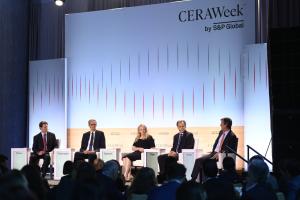
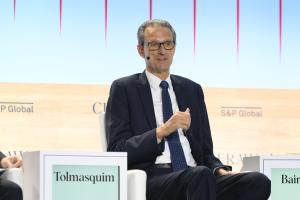
Petrobras' Director of Energy Transition and Sustainability, Mauricio Tolmasquim, took part in a panel at CERAWeek this Wednesday
Download Petrobras' Director of Energy Transition and Sustainability, Mauricio Tolmasquim, took part in a panel at CERAWeek this WednesdayPetrobras' Director of Energy Transition and Sustainability, Mauricio Tolmasquim, took part on Wednesday (3/20) in the panel "Latin America's Natural Gas Future" during CERAWeek in Houston, USA. With representatives from companies in Argentina, Mexico, Colombia, and Petrobras, the central theme of the debate was the challenge of developing the potential of gas reserves as well as technological solutions to reduce the cost of green hydrogen and increase its scale.
The participants in the debate agreed that Latin America is rich in quality energy resources with great potential. They also unanimously listed the main challenges for developing this potential, which include planning, infrastructure, and lower costs.
"The forecast is that, by 2030, Brazil will be the country with the lowest green hydrogen operating costs," commented Tolmasquim. The director argued that new technologies are being studied to make green hydrogen production cheaper.
The executive also commented that Petrobras consumes large volumes of grey hydrogen in its refining activities, which is why the company sees the green hydrogen market as an opportunity. "We can replace grey hydrogen with green hydrogen in our refineries," he said.
Concerning the gas market, Tolmasquim commented that one of Petrobras' strategies is to expand supply by investing in the infrastructure of projects such as Rota 3, which will have a gas pipeline with a capacity of 18 million m3 per day; the BMC-33 project, which provides for a gas pipeline with a capacity of 16 million m3 per day; and Sergipe Águas Profundas - SEAP, which provides for a further 18 million m3 per day of capacity.
Photos


Downloads
Text of this article
Text downloadVideos from this article
You may be interested in


Use our search to find what you are looking for
Do a search:
Most searched
Fuel price
Pre-salt
Team Petrobras
Choose a channel:
Do a search:
Most searched
Fuel price
Pre-salt
Team Petrobras
Accessibility:
Language:
Select a language: